The best part of my town is not living on the edge of the world's first national park with breathtaking scenery. It is not going for morning walks and watching an osprey dive into the river and come back out clutching trout in its talons. It's not having a staring contest with a pronghorn antelope or hearing the elk bugle. The best part of my town is Derek. I knew Derek would be "the one" when I first met him. He handed my keys to me, our hands touched, and as our eyes locked he said with a quiet, confident smile, "Everything should be better now." I knew, deep in my heart, that he was right. And since that moment, some months ago, things have been magical and different. I feel like I'm living in a fairy tale.
Derek takes care of my car.
My car has waited a long, long time to have a relationship like this. This little Hyundai has traveled across the country and throughout the Rocky Mountains. It's been tough at times, this search for "the one". Time after time my car's been out of my care, but she always comes back unsatisfied after the first date. It's probably partly my fault. I do my best to take good care of her, but I'm afraid all too often she has received only barely competent care. I pushed oil changes off as long as possible and when I couldn't wait anymore I drove straight to the cheapest, quickest place that I could find. All of that changed when I came here. Derek is the caretaker my little one has always hoped for. He changes the oil, checks the battery (I don't ask him to and he doesn't charge), tightens loose bolts (no charge), reminds me to rotate and/or buy new tires (free of charge), selects the best tires for the car (also free of charge), and orders them because by now he knows me, my car, and my budget well enough to know what we both need. He promises to call when they come and I know my Hyundai can't wait to spend another afternoon with him.
For me, I appreciate that he keeps me in the loop in this relationship. Derek often stops by my work, where he's also responsible for our fleet of vehicles. Without fail, he pokes his head into my office with a smile and asks, "How's your car running?" As if all of this wasn't enough to earn my undying loyalty and my car's affection, when there is work to be done on the car I park it behind the building and leave the keys inside. He comes, picks it up, and drops it back off while I'm at work. No more sitting in the Jiffy Lube waiting room eating stale popcorn (especially since the nearest Jiffy Lube is 80 miles away). No more wondering if I really need a new air filter or if the company is looking to make an extra buck on my ignorance. I don't even know Derek's last name, but if I did I'd send him flowers because my car has found true love.
Thursday, September 22, 2011

Monday, September 12, 2011
Late Summer Love Song
In the past month I've spent more time away from town and up in the hills. It's an incredible time of year here. The plants, animals, and people seem to be soaking up all of this last warm weather. Already, there is a chill in the night air. Nests are empty, but the skies are full of the birds that once were eggs filling those nests. Day after day the sky is blue. I think if I could jump just a little higher I could grab a handful of that blue. I would keep it safe, and when life and skies are grey, the handful of blue would remind me that summer always comes again.


The meadows that were green look as if King Midas had come for a visit. The sun plays on the glacially-carved slopes creating folds in the golden grass. When I look closely, I can see every plant an animal preparing for the winter ahead. The elk are gathering and the bulls are bugling. The flowers have turned to an endless array of seeds and fruits. Other animals are hastily eating and storing what the plants are producing. A few, late season flowers are still blossoming.


Obviously, Yellowstone isn't famous for its fall colors. But that makes every plant I see losing its chlorophyll even more beautiful because its so rare. I see them tucked in the shadows, under the fir trees, and I know that summer will soon be gone. Nothing lasts forever, which is okay too. I can feel change in the air. I look around me at summer ending. I see plants dying and becoming dormant. The flowers have withered, but in their place seeds wait patiently for the wind to carry them away. I'm reminded that every ending contains a new beginning.


 |
| Four Red Tailed Hawks soaring in the afternoon |


The meadows that were green look as if King Midas had come for a visit. The sun plays on the glacially-carved slopes creating folds in the golden grass. When I look closely, I can see every plant an animal preparing for the winter ahead. The elk are gathering and the bulls are bugling. The flowers have turned to an endless array of seeds and fruits. Other animals are hastily eating and storing what the plants are producing. A few, late season flowers are still blossoming.


Sunday, September 4, 2011
Fun With Mud Pots
I spent a few days shadowing instructors. I came back impressed by their skill as educators and also grateful that in 1872 the United States had the foresight to set aside the land we call Yellowstone to be preserved. It is an incredible place. As I watched the instructors I saw them reach their young students--the youth connected with the place. It's a beautiful thing to love a place. Exupery in The Little Prince wrote about how loving and knowing a flower makes it different from all the other flowers. Loving and knowing a place gives it a magical quality. It stands out from other places because of what you saw, felt, thought, experienced, or became in that place.


 |
| View of Gallatin Mountains from Artist Paint Pots |
 |
| Looking down from the top of the Artist walk |
The days spent with instructors rekindled my love for the place. It renewed my sense of awe for the literally thousands of varied thermal features in the park. It reminded me that I get to do a work that is very important to me.

And, I finally got some great pictures of mudpots. You don't know how hard it is to catch these at the right moment. I must have a hundred pictures of blank pools of mud to get these three good shots.


 |
| This is bison scat with plants growing out of it. Seed germination in poo in the middle of a geyser basin! |
 |
| The green is photosynthetic algae living in the runoff channel of a hot spring. |
 |
| This girl is using a temperature gun, but wasn't such a fan of the rotten-egg smell. |
 |
| The colors of Grand Prismatic are reflected into the steam |
 |
| This is why I feel my work is important. What is she thinking and what will it mean when she gets home? |
Thursday, August 11, 2011
The Mystery of the Funk
I keep waking up on the wrong side of the bed. I wake up mildly crabby and vaguely discontented. I know the easy solution is just to move my bed so that I can wake up on the other side, but it's just not that simple. There really is only one way for my bed to fit in my little room, which is wedged into the corner. That means there is only one side for me to get out of the bed, and clearly, it's the wrong one. Which has led me into deep and serious introspection about Funks. What causes Funks to happen? I'm clearly in the midst of one that is difficult to shake. For those who are unfamiliar with what a Funk is like, allow me to enlighten you.

Funk, pronounced "fuhngk", is an emotional state of being where nothing is really wrong, but nothing is really right either. It comes as a series of "bad days" that have no event that makes them "bad". A Funk can be difficult to identify because its accompanying signs and symptoms can present themselves very differently. Common symptoms are a mild to moderate case of the blues, uncertainty of current and possibly future life paths, discontent, and general lack of excitement, interest, or motivation. The patient may also find him/herself asking, "What is the point? I seem to have forgotten why I'm living the way I do. I can't remember what goal I'm working towards." These symptoms can be difficult to pinpoint or explain, but are often accompanied by a nagging feeling that something is missing. Nothing is wrong, per se, but something isn't quite right.

Having a funk is like having a really nasty cold. After being sick for a week or two with no signs of real improvement I ask myself, "Do I go to a doctor or not? Would it really make a difference or do I just wait it out?" Those are the same questions asked during a mysterious case of the Funk. "Do I change something in my life or not? Would it really make a lasting difference or do I just wait it out?" For most cases of the Funk I prescribe keep going, get outside, and give it time. In other words, don't just eat toast, make some dinner. Take a walk, go for a bike ride, watch a sunrise, find some mountains to climb or watch the sun set behind. Truly difficult cases may require more aggressive treatment: tell someone about your Funk, read some fiction, and have a good cry. If you've diligently (and repeatedly) done all of the above and have found that Funk symptoms persist, the time has come to address that nagging feeling and truly, bravely ask yourself, "What is missing?"

Funk, pronounced "fuhngk", is an emotional state of being where nothing is really wrong, but nothing is really right either. It comes as a series of "bad days" that have no event that makes them "bad". A Funk can be difficult to identify because its accompanying signs and symptoms can present themselves very differently. Common symptoms are a mild to moderate case of the blues, uncertainty of current and possibly future life paths, discontent, and general lack of excitement, interest, or motivation. The patient may also find him/herself asking, "What is the point? I seem to have forgotten why I'm living the way I do. I can't remember what goal I'm working towards." These symptoms can be difficult to pinpoint or explain, but are often accompanied by a nagging feeling that something is missing. Nothing is wrong, per se, but something isn't quite right.

Having a funk is like having a really nasty cold. After being sick for a week or two with no signs of real improvement I ask myself, "Do I go to a doctor or not? Would it really make a difference or do I just wait it out?" Those are the same questions asked during a mysterious case of the Funk. "Do I change something in my life or not? Would it really make a lasting difference or do I just wait it out?" For most cases of the Funk I prescribe keep going, get outside, and give it time. In other words, don't just eat toast, make some dinner. Take a walk, go for a bike ride, watch a sunrise, find some mountains to climb or watch the sun set behind. Truly difficult cases may require more aggressive treatment: tell someone about your Funk, read some fiction, and have a good cry. If you've diligently (and repeatedly) done all of the above and have found that Funk symptoms persist, the time has come to address that nagging feeling and truly, bravely ask yourself, "What is missing?"
 |
| Sunset walk last week |
Tuesday, July 26, 2011
The Perfect Day
"What is your perfect day?" It's the kind of question I never know how to answer. What kind of fabulous combination of people and adventures makes up a perfect day? It depends on where and when you're at. Over the 4th of July I had not just a perfect day, but also the best Independence Day holiday I've ever had. I didn't even stop to take a picture of any of it because I couldn't bear to let a viewfinder get in between me and the moment.
It began Friday afternoon with a last minute trip to Salt Lake City. I left Gardiner worried and confused. I arrived in Utah late that night to find my old roommate, Amy, waiting up for me. Saturday dawned clear with a sunrise walk, time in the temple, and an afternoon spent with my sister-friend Miriam. Have you ever met a person that you know is your sister, but was stolen away at birth? That's Miriam. We drove up to the mountains to swim in cold lake water, laughed in the sun, and ate at a fancy French bakery for dinner. In Montana bison burgers are easy to come by, but nicoise salad is much harder. That evening I went with Amy to see fireworks. We danced to the live band and I reveled in the sparkling array that lit the night sky. As I lay on my back and watched the sparks dance, I reflected on what a great honor it is to work in the National Park world. At that moment, my work felt rather patriotic. Amy and I talked far too late into the night. I had forgotten what it was like to have someone to talk to before bed!
Sunday morning found me attending church in the chapel where I worshiped for my time in Salt Lake. I soaked up hugs, friends, and the looks of surprise when friends saw me. In the afternoon I drove south to visit with my sister Eve. We cooked Indian food, took long walks, talked and talked and talked, wrote, read, and then were silent. An old friend came by that evening for a visit which ended with us running through sprinklers in the dark and laughing as the water dripped our noses.
Monday morning came. Eve and I went for a short hike and then I began working my way north. I stopped for dinner with my family in Idaho and then drove to our cabin to stay the night. It was Independence Day and although there were no city fireworks to see, an evening thunderstorm created a show much more impressive than any city could accomplish. I arrived at the cabin where the mosquitoes were as thick as the rain. The storm had knocked out the power, which was fine because I was so tired I fell right into bed. In the morning I rose with the sun and finished the drive to my work.
The confusion that I had felt leaving Gardiner was gone. Instead, there was clarity and peace inside. I understood myself and my course. A perfect day, or days, don't have to be complicated at all. Looking back, the events are a small part of the equation, but being with people I love more than completes it. I've said it before and I'll keep on saying it: people matter most. No wonder I studied sociology! Of course there were friends I didn't see during that whirlwind weekend, but I still look back and see that Independence Day trip as the best holiday I've had in a long time.
It began Friday afternoon with a last minute trip to Salt Lake City. I left Gardiner worried and confused. I arrived in Utah late that night to find my old roommate, Amy, waiting up for me. Saturday dawned clear with a sunrise walk, time in the temple, and an afternoon spent with my sister-friend Miriam. Have you ever met a person that you know is your sister, but was stolen away at birth? That's Miriam. We drove up to the mountains to swim in cold lake water, laughed in the sun, and ate at a fancy French bakery for dinner. In Montana bison burgers are easy to come by, but nicoise salad is much harder. That evening I went with Amy to see fireworks. We danced to the live band and I reveled in the sparkling array that lit the night sky. As I lay on my back and watched the sparks dance, I reflected on what a great honor it is to work in the National Park world. At that moment, my work felt rather patriotic. Amy and I talked far too late into the night. I had forgotten what it was like to have someone to talk to before bed!
Sunday morning found me attending church in the chapel where I worshiped for my time in Salt Lake. I soaked up hugs, friends, and the looks of surprise when friends saw me. In the afternoon I drove south to visit with my sister Eve. We cooked Indian food, took long walks, talked and talked and talked, wrote, read, and then were silent. An old friend came by that evening for a visit which ended with us running through sprinklers in the dark and laughing as the water dripped our noses.
Monday morning came. Eve and I went for a short hike and then I began working my way north. I stopped for dinner with my family in Idaho and then drove to our cabin to stay the night. It was Independence Day and although there were no city fireworks to see, an evening thunderstorm created a show much more impressive than any city could accomplish. I arrived at the cabin where the mosquitoes were as thick as the rain. The storm had knocked out the power, which was fine because I was so tired I fell right into bed. In the morning I rose with the sun and finished the drive to my work.
The confusion that I had felt leaving Gardiner was gone. Instead, there was clarity and peace inside. I understood myself and my course. A perfect day, or days, don't have to be complicated at all. Looking back, the events are a small part of the equation, but being with people I love more than completes it. I've said it before and I'll keep on saying it: people matter most. No wonder I studied sociology! Of course there were friends I didn't see during that whirlwind weekend, but I still look back and see that Independence Day trip as the best holiday I've had in a long time.
Wednesday, July 13, 2011
Milestones
I ran for twenty minutes today. That's twenty minutes more than I have run without pain in two years and eight months. I last ran a marathon almost three years ago and sustained an injury shortly afterwards. It has been a long road to get back. In summary: two physical therapists, three sports medicine specialists, one nurse practitioner, one acupuncturist, home remedies, running store advice, wacky shoes, and endless Google searches. Treatments have included two years of physical therapy, four kinds of insoles and orthotics, sleeping with a night splint for ten months, oral steroids, a handful of steroid injections, two x-rays, ultrasound imaging, and six "dry needling" procedures (think lawn aeration or meat tenderizer), and pain killers. I gave up running, hiking, dancing, walking, and standing. I counted each step.
I recognize that I am not fully recovered and that more treatments may still be in store. There were times I doubted, but I am now confident that recovery is possible. There were times I looked at past medals and wondered if I would ever even walk without limping. Now though, I can be grateful for the injury. I learned a few things. Two weeks off an injury is much better than two years--listen to your body. A one mile walk is not to be poo-pooed. I have a glimpse of what it is like to live with a disability or constant pain. Faster and farther are not always better. Patience, patience, and then keep hoping someday I'll learn patience. Sometimes it's good just to be still.
When I left in the morning, knowing this was the day I would try to run, I worried that I wouldn't like to run anymore. Not so. Winded as I was, I loved feeling my heart, arms, legs, and lungs all pumping together. I'm taking it slow (don't worry, I've learned my lesson) and have no plans for races any time soon. But I love waking up before my alarm goes off because I can't wait to get outside and greet the sun as it slips over the mountain. I am blessed. Anyone up for a run?
In the spirit of this, with tongue in cheek, I provide the following perspective. Because now, it is something I can laugh about.


I recognize that I am not fully recovered and that more treatments may still be in store. There were times I doubted, but I am now confident that recovery is possible. There were times I looked at past medals and wondered if I would ever even walk without limping. Now though, I can be grateful for the injury. I learned a few things. Two weeks off an injury is much better than two years--listen to your body. A one mile walk is not to be poo-pooed. I have a glimpse of what it is like to live with a disability or constant pain. Faster and farther are not always better. Patience, patience, and then keep hoping someday I'll learn patience. Sometimes it's good just to be still.
When I left in the morning, knowing this was the day I would try to run, I worried that I wouldn't like to run anymore. Not so. Winded as I was, I loved feeling my heart, arms, legs, and lungs all pumping together. I'm taking it slow (don't worry, I've learned my lesson) and have no plans for races any time soon. But I love waking up before my alarm goes off because I can't wait to get outside and greet the sun as it slips over the mountain. I am blessed. Anyone up for a run?
In the spirit of this, with tongue in cheek, I provide the following perspective. Because now, it is something I can laugh about.


Sunday, July 10, 2011
First Light
A week ago I went for an early morning walk on Sepulcher's foothills.

I was in search of Bitterroot blossoms. It was dawn and I had never seen the flower, it grows mostly in Western Montana and parts of Idaho. I knew I would know it when I saw it. I felt that way once before. I was in the Louvre in Paris, looking for a statue called The Slave by Michelangelo. I had never seen a picture of it, but had read a book about Michelangelo's work. Lost, I wandered from room to room. As I entered a new room, I saw a white marble statue from the back. Without sign or even full form I knew that this was indeed the piece I was searching for. That's how I felt about Bitterroot. I desperately wanted to see it, for reasons that are hard to put into words--I felt I would understand this place (and in it my place) better. I found some buds, watched the sun creep over the mountains, and waited for the petals to unfurl.

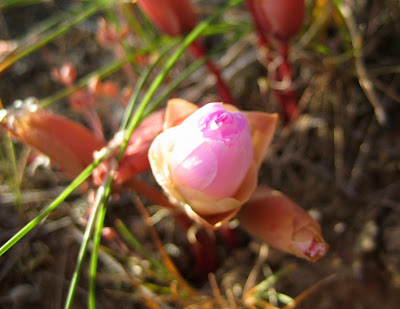

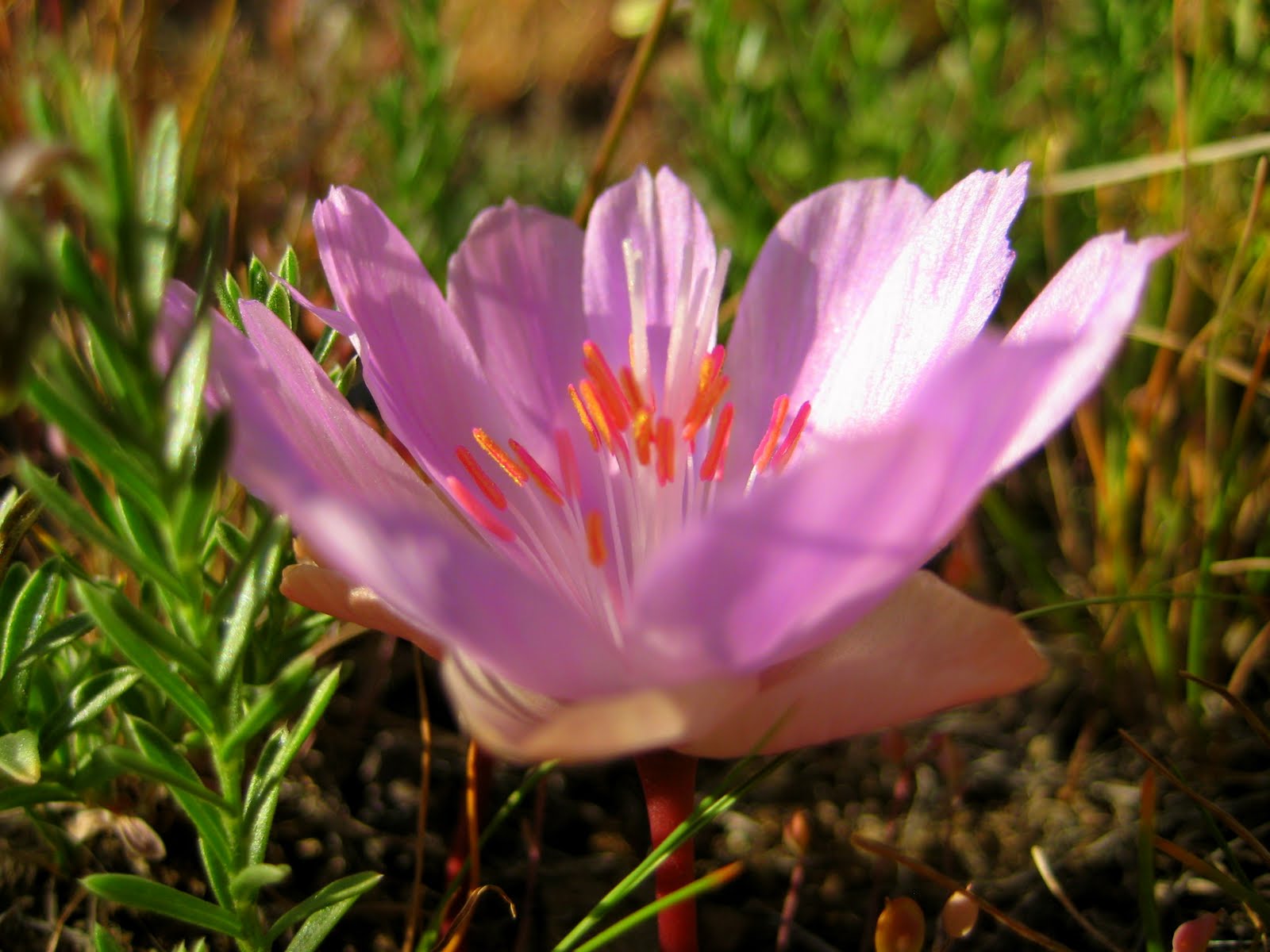
The blossom is beautiful--a delicate pink--and grows out of the most unforgiving, rocky soil. It would be spectacular anywhere, but is especially breathtaking given its unlikely location. Bitterroot's scientific name is Lewisia rediviva. Lewisia after Meriwether Lewis of the Lewis and Clark expedition who found and named it. Rediviva because the plant is legendary for being able to live without water for over a year. It is sometimes called the "resurrection flower": it symbolizes strength and beauty under almost impossible conditions. The leaves appear first, looking a little like green anemones, then they die and the blossom appears alone in the rocky soil. I imagined the Lewis and Clark expedition traveling not far from where I stood. I imagined Lewis's wonder as he saw the blossoms appearing underfoot.


I thought of the many Native American tribes (Nez Perce, Flathead, Shoshone, Spokane, Kalispell, and Pend d'Oreille) who depended on it for food. As the name Bitterroot suggests, the root wasn't too great on its own. But it many tribes timed their trek east for bison hunting with the Bitterroot flowers so they could dig its taproot. The roots were cooked and then mixed with meat and berries into small cakes--the first energy bar! These could be carried and eaten while traveling. The plant could also be traded with another tribe or with pioneers or trappers. A sack of prepared Bitterroots could purchase a horse. Sometimes there is much to be gained in life by knowing how to handle something that on the surface is bitter. The bitterroot was valuable when properly prepared. We too can become better when tested and changed by life experiences that initially seem bitter.

One Native legend tells the origin of the plant. A mother was crying because she could not find food for her children. The sun heard her cries and changed her tears into the Bitterroot so that she would always have food for her family.

I gently touched the petals--aglow with the morning sun. I pondered new hopes, second chances, perseverance, and new life found in unexpected, difficult places.

Sources: http://www.50states.com/flower/montana.htm, http://www.wildflowerinformation.org/wildflowerfolklore.asp, http://ezinearticles.com/?The-Resurrection-Flower---Montanas-Bitterroot-Wildflower&id=886513

I was in search of Bitterroot blossoms. It was dawn and I had never seen the flower, it grows mostly in Western Montana and parts of Idaho. I knew I would know it when I saw it. I felt that way once before. I was in the Louvre in Paris, looking for a statue called The Slave by Michelangelo. I had never seen a picture of it, but had read a book about Michelangelo's work. Lost, I wandered from room to room. As I entered a new room, I saw a white marble statue from the back. Without sign or even full form I knew that this was indeed the piece I was searching for. That's how I felt about Bitterroot. I desperately wanted to see it, for reasons that are hard to put into words--I felt I would understand this place (and in it my place) better. I found some buds, watched the sun creep over the mountains, and waited for the petals to unfurl.

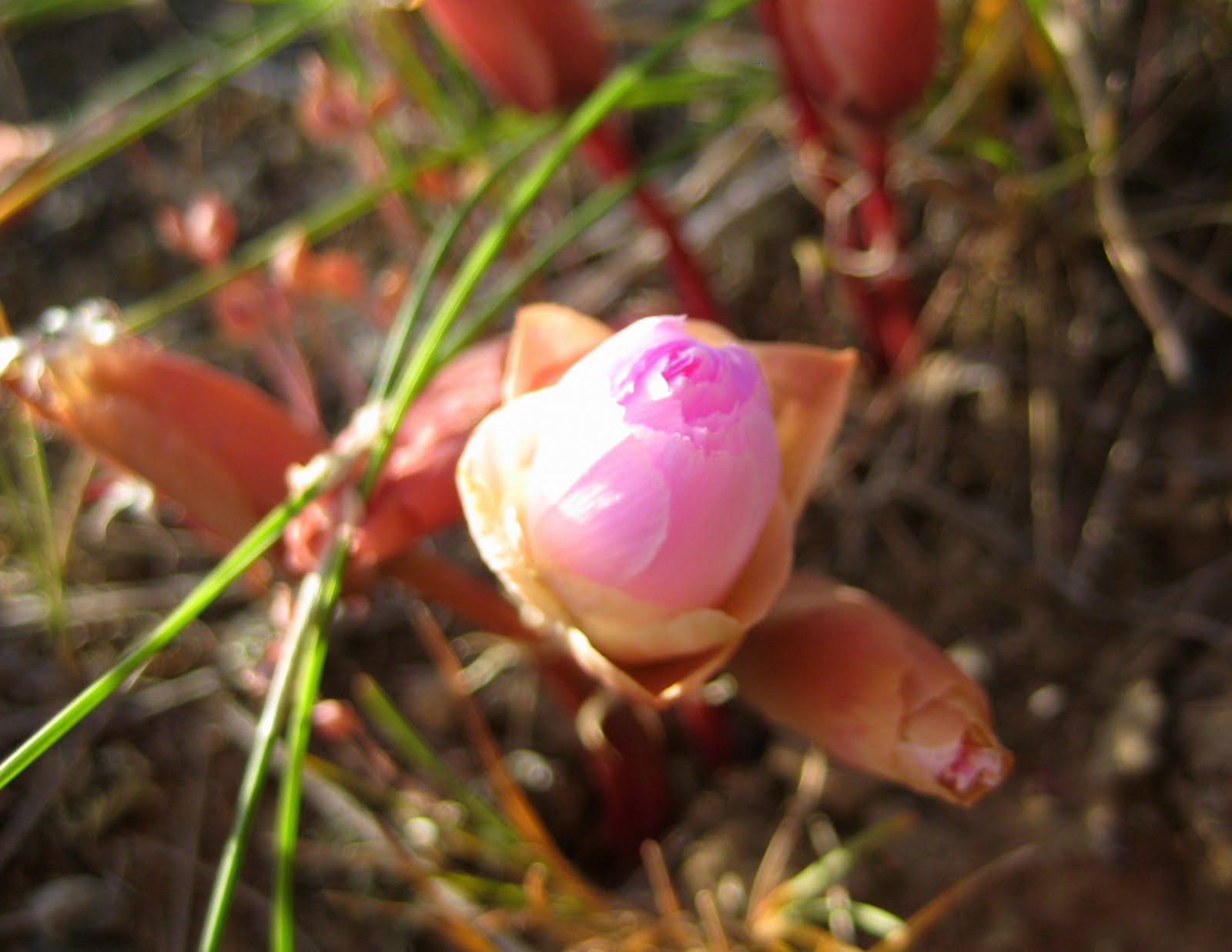

The blossom is beautiful--a delicate pink--and grows out of the most unforgiving, rocky soil. It would be spectacular anywhere, but is especially breathtaking given its unlikely location. Bitterroot's scientific name is Lewisia rediviva. Lewisia after Meriwether Lewis of the Lewis and Clark expedition who found and named it. Rediviva because the plant is legendary for being able to live without water for over a year. It is sometimes called the "resurrection flower": it symbolizes strength and beauty under almost impossible conditions. The leaves appear first, looking a little like green anemones, then they die and the blossom appears alone in the rocky soil. I imagined the Lewis and Clark expedition traveling not far from where I stood. I imagined Lewis's wonder as he saw the blossoms appearing underfoot.


One Native legend tells the origin of the plant. A mother was crying because she could not find food for her children. The sun heard her cries and changed her tears into the Bitterroot so that she would always have food for her family.

I gently touched the petals--aglow with the morning sun. I pondered new hopes, second chances, perseverance, and new life found in unexpected, difficult places.
Sources: http://www.50states.com/flower/montana.htm, http://www.wildflowerinformation.org/wildflowerfolklore.asp, http://ezinearticles.com/?The-Resurrection-Flower---Montanas-Bitterroot-Wildflower&id=886513
Subscribe to:
Posts (Atom)